Lens Review of a surprising Wide Angle Prime
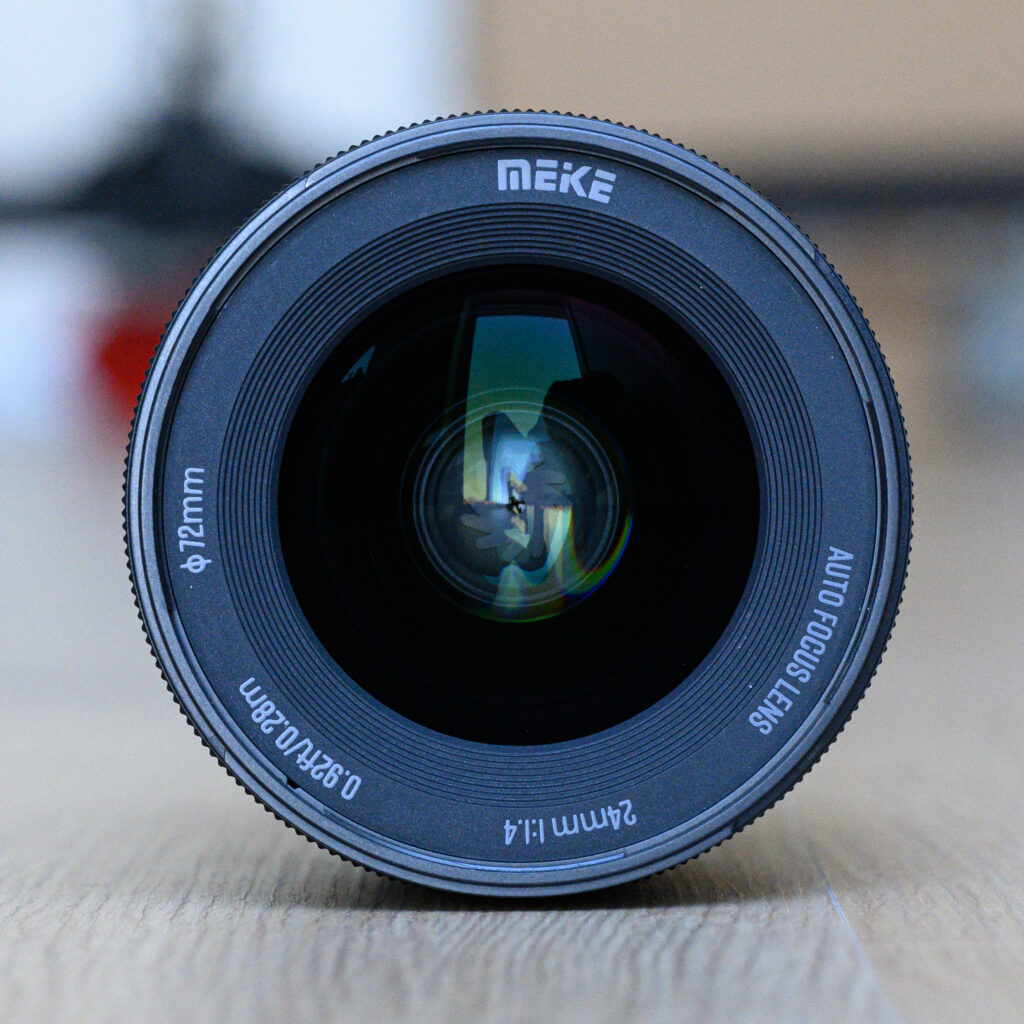
The Meike 24mm f/1.4 MIX for Nikon Z is one of those lenses that does look particularly promising on paper. In a world where fast wide-angle primes are usually expensive and often over-engineered, this lens feels like a very intentional attempt to hit a sweet spot: strong performance, useful features, and a price that doesn’t feel intimidating. Can it live up to this expectation?
What makes it especially interesting is that Nikon doesn’t currently offer a native 24mm f/1.4 for Z mount. So this lens isn’t just a budget alternative – it is actually filling a real gap in the market.
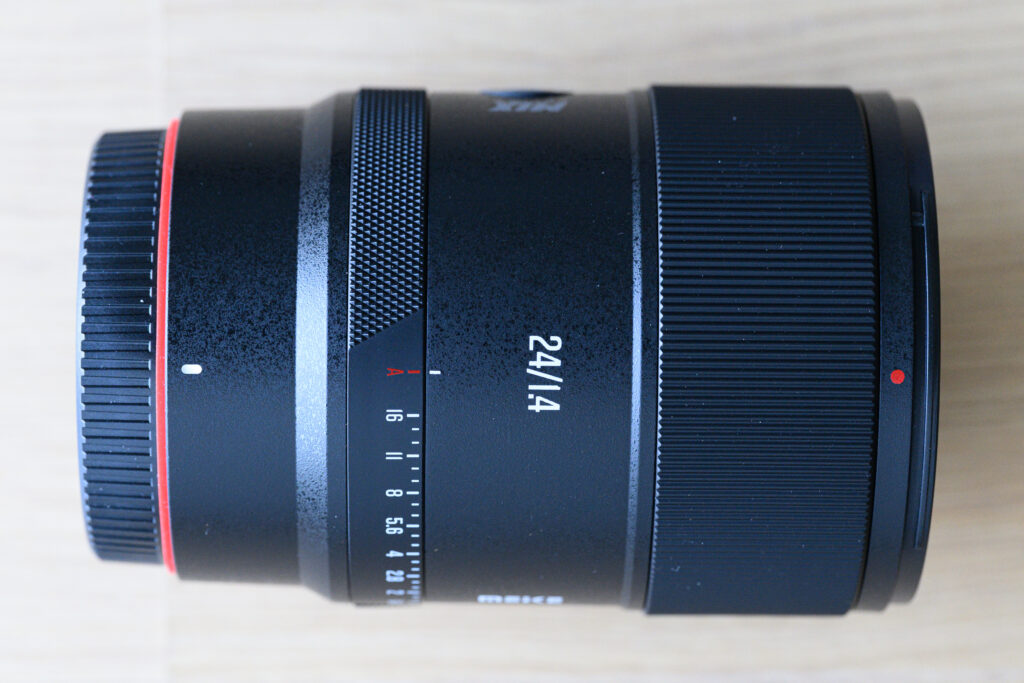
Build Quality & Handling
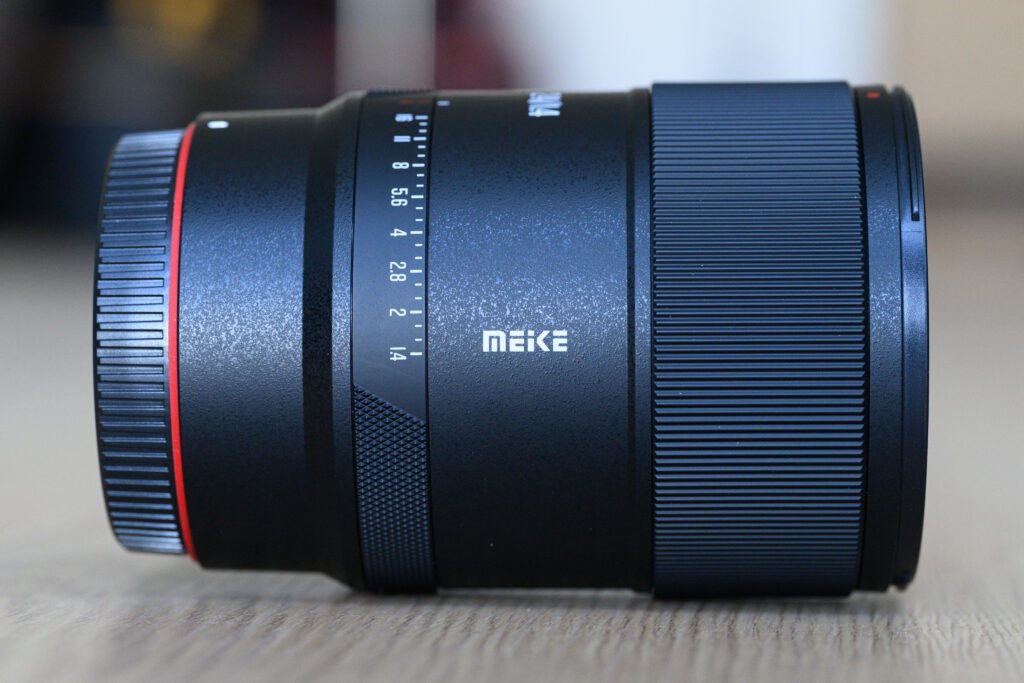
The first thing you notice is that this isn’t a tiny, compact prime. Weighing about 560g, the solid metal and polycarbonate construction feels exceptionally durable and professional (similar to a modern Nikon Prime). It features a dedicated, clicked aperture ring (with 1/3 stops) and a customizable focus hold button, which is excellent for photographers providing additional flexibility without the need to go into menu settings. The lens also comes with dedicated weather sealing around it (not only on lens mount) making it an ideal travel partner though all conditions. An available USB-C port on the mount makes firmware updates painless. The notable feature set includes
- Metal mount
- Customizable focus hold button
- Extended weather sealing
- USB-C port for firmware updates
- Smooth focus ring and well-damped aperture ring
Image Quality
Sharpness & Optical Design
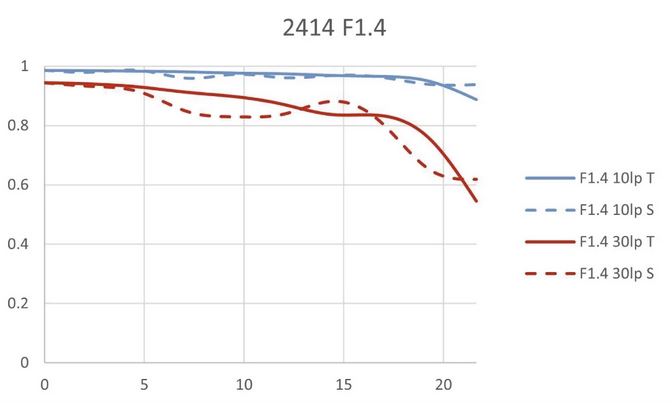
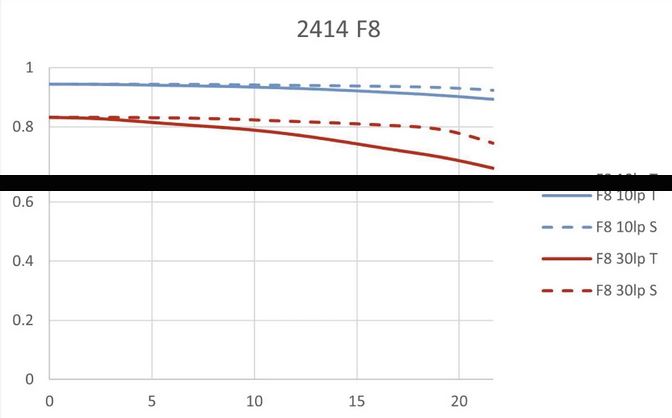
Sharpness is easily one of the strongest aspects of this lens. Wide open at f/1.4, the center is already very good – crisp, detailed, and with great microcontrast. It doesn’t have that hazy, low-contrast look that some fast lenses struggle with. That said, the corners do not fall behind much at f/1.4. They are definitely usable wide open. In very high-detail scenes like landscapes or architecture I would stop down a bit to get the best possible performamnce out of the lens. Once you stop down to f/2 or f/2.8, things improve significantly, and by f/4 you get a very even performance across most of the frame. At f/5.6 and f/8 it is superb from corner to corner (compare MTFs below).
No wonder as the lens uses a relatively complex modern design: 15 elements in 12 groups. This places it structurally in the same category as many high-end wide-angle f/1.4 lenses, not entry-level optics.
The optical design makes use of a range of advanced glass elements, including 3x aspherical elements, 3x extra-low dispersion (ED) elements, and 2x high-refractive (HR) elements. Aspherical elements play a key role in correcting spherical aberrations and distortion, which is especially important for maintaining sharpness in a fast wide-angle lens. ED elements allow for stronger light refraction. This helps keep the overall design more compact despite the bright f/1.4 aperture. Taken together, this combination reflects a modern optical design approach, where multiple specialized elements are used in tandem to correct different optical imperfections simultaneously.
In practice, this design delivers very strong control over chromatic aberrations, with longitudinal CA being particularly well managed – an impressive result for a lens in this class and a clear indication of effective ED glass usage and careful optical balancing. Distortion is present, but it remains relatively low overall. This suggests a deliberate compromise between perfect geometric correction and preserving high sharpness and a fast aperture. Vignetting is noticeable at f/1.4, as expected, but remains less pronounced than in many competing lenses. This is likely due to the use of a relatively large front element and a less restrictive optical path, resulting in reduced mechanical vignetting.
MTF Chart
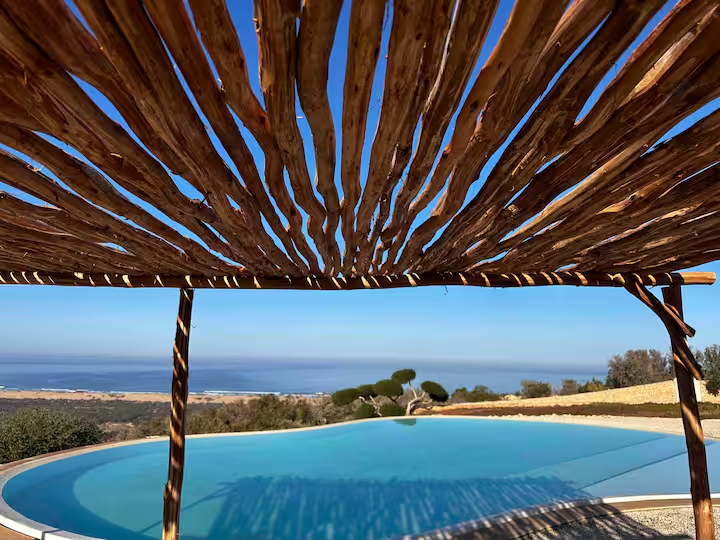
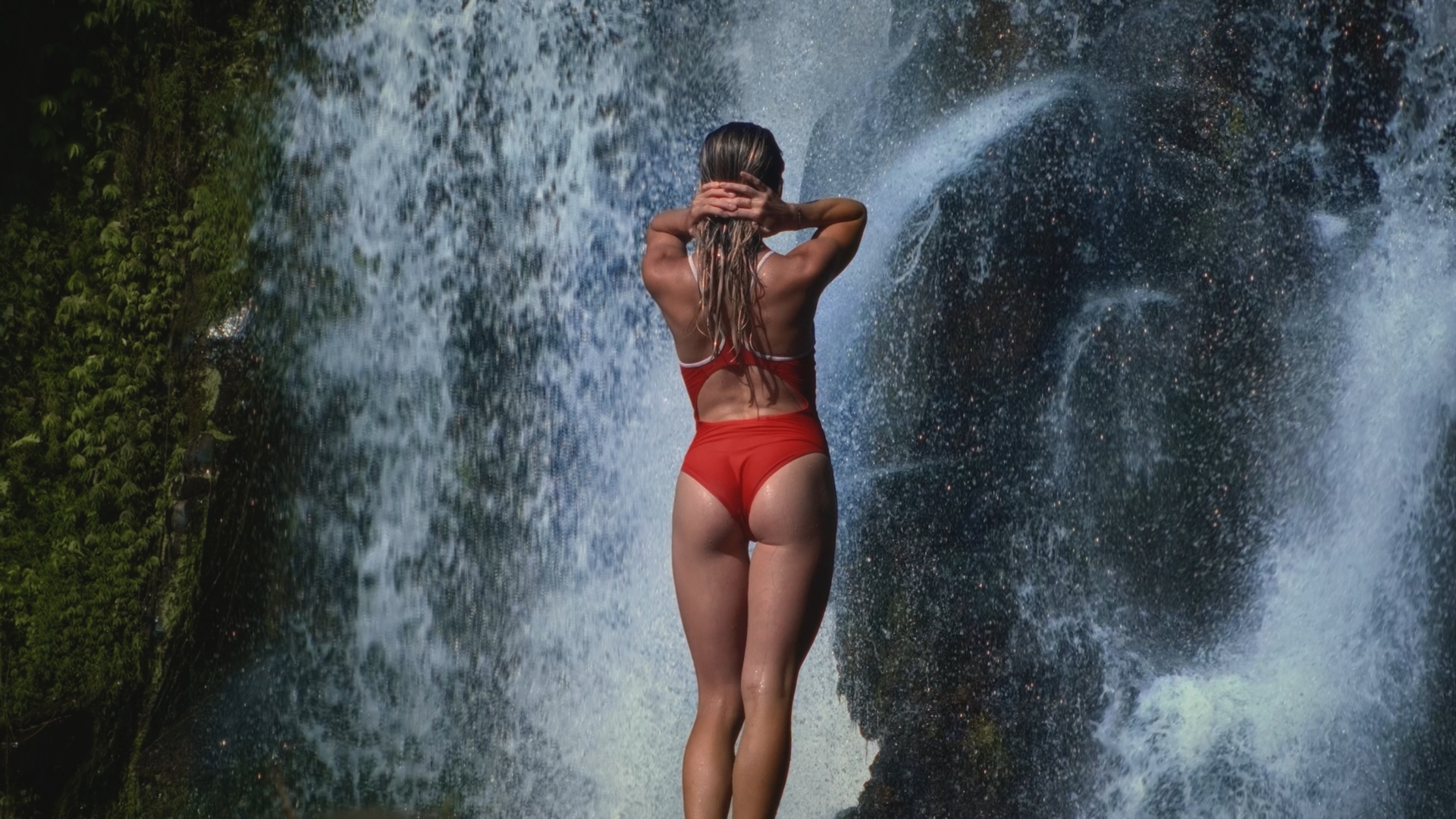
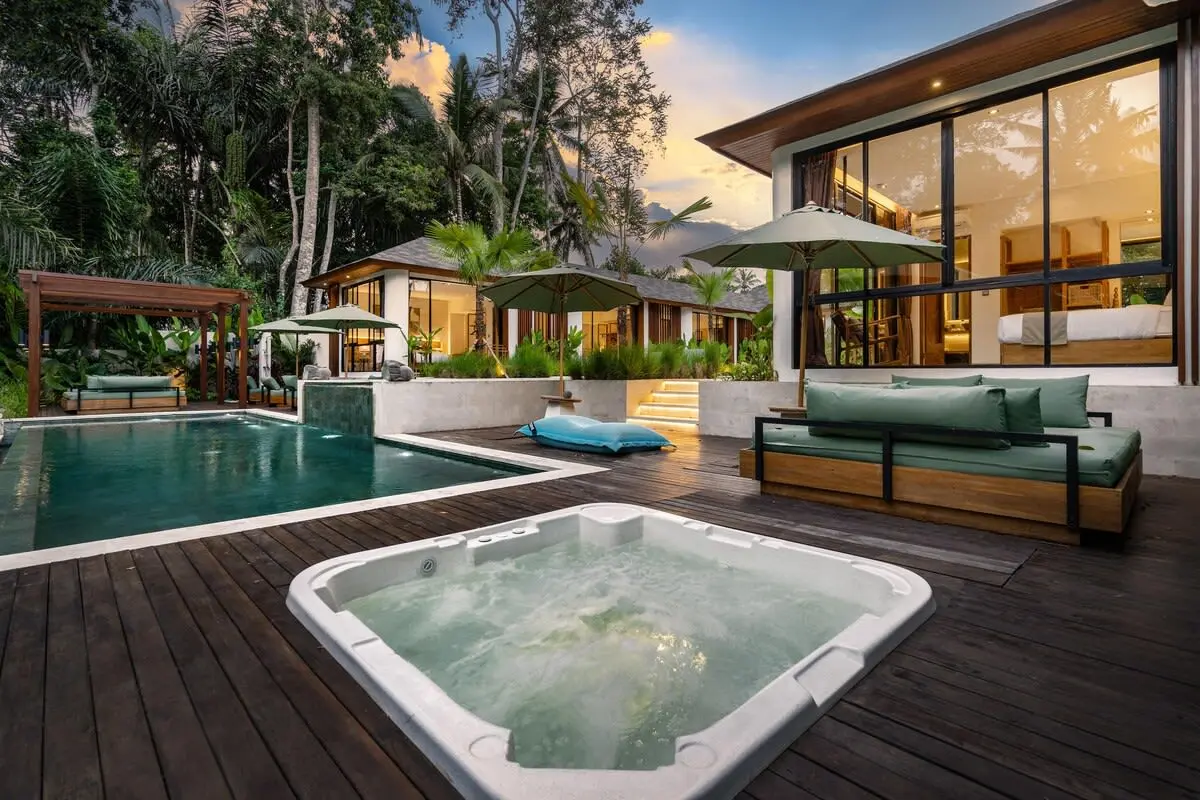
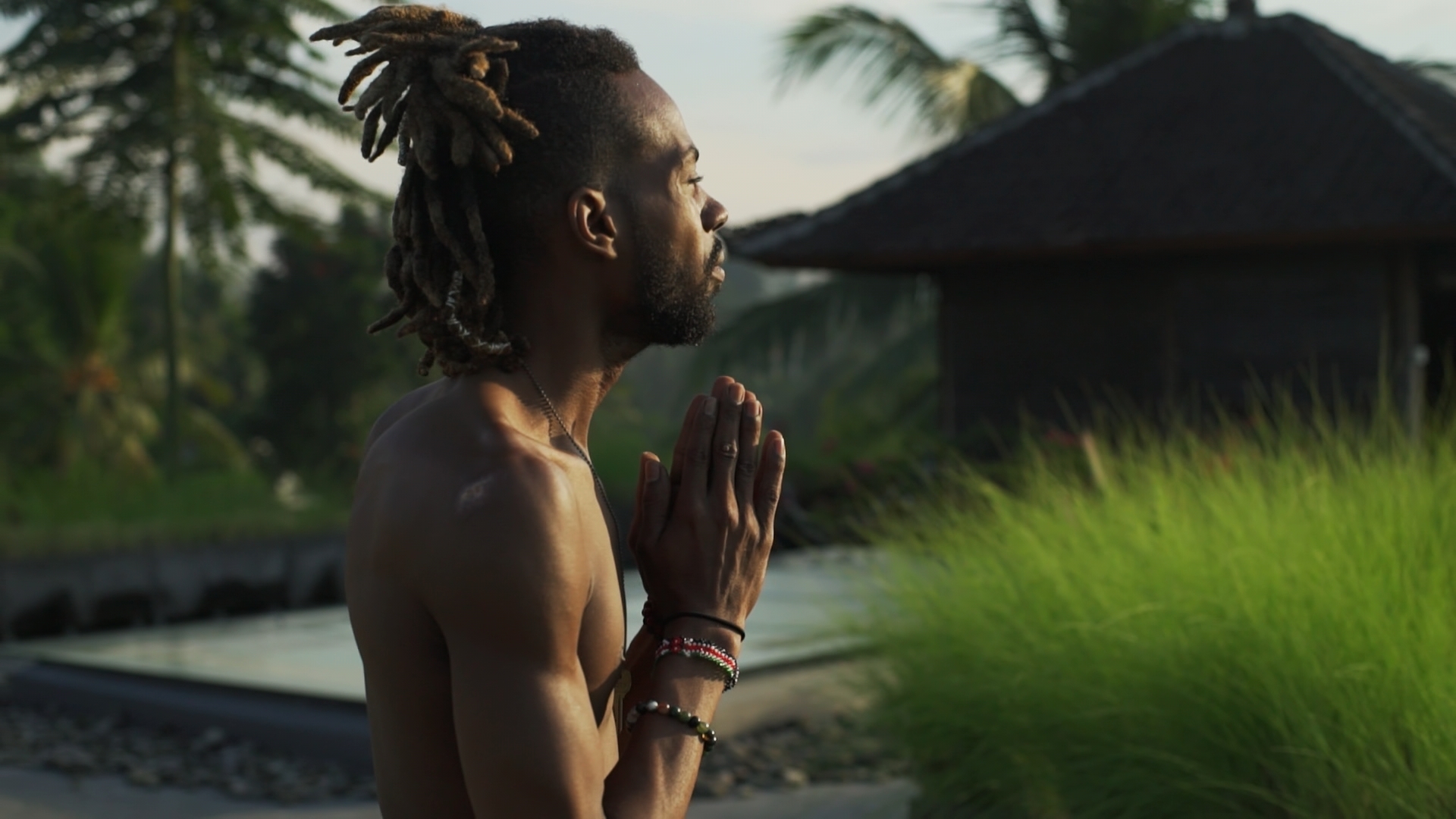
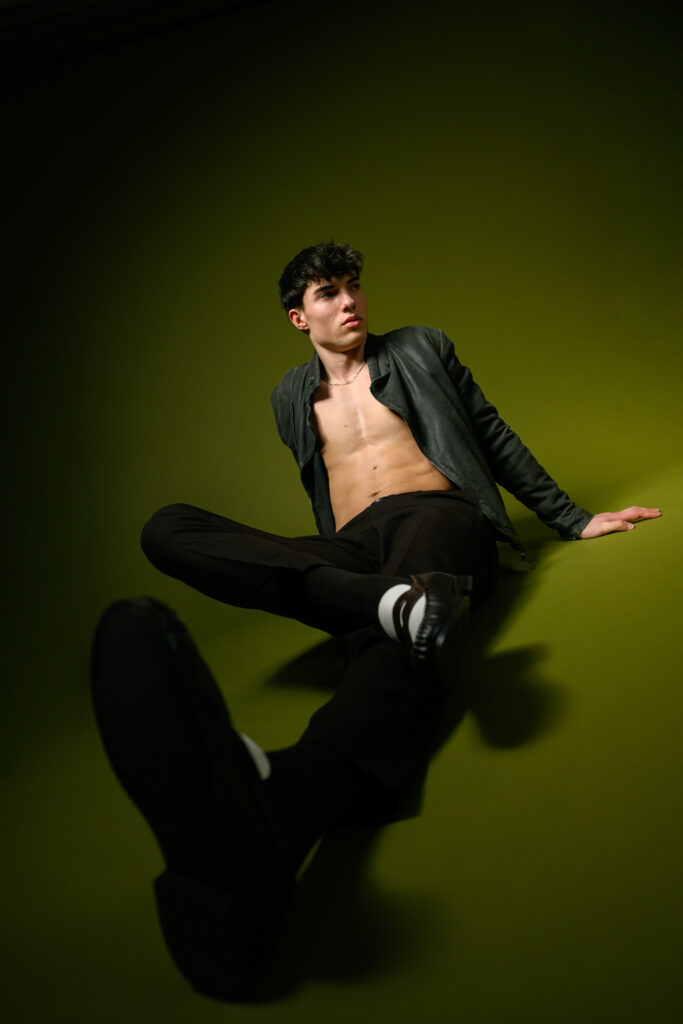
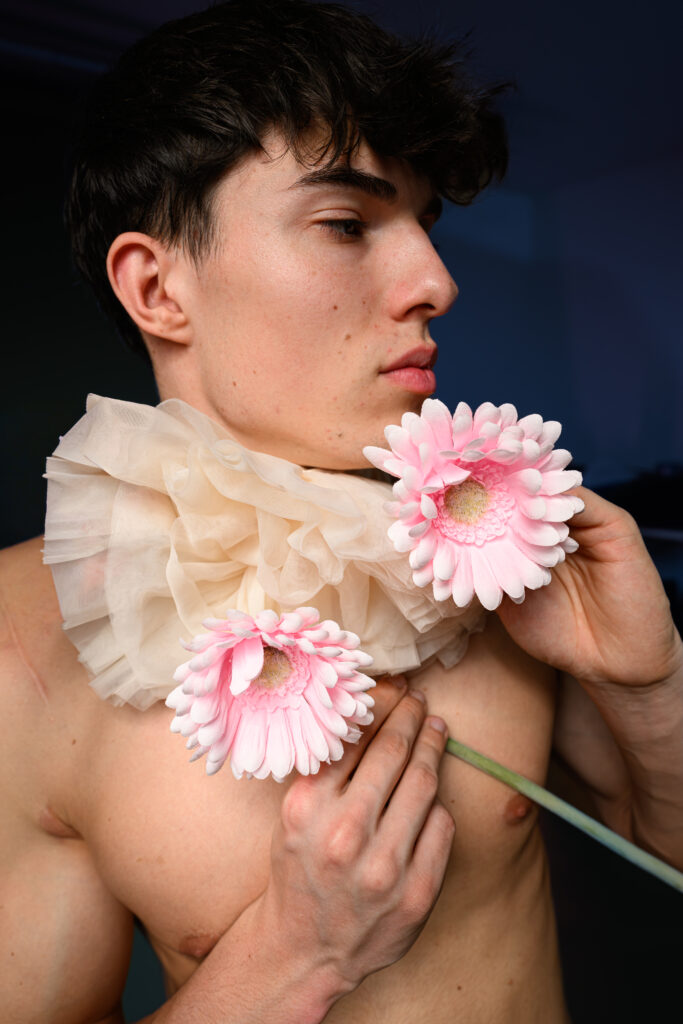
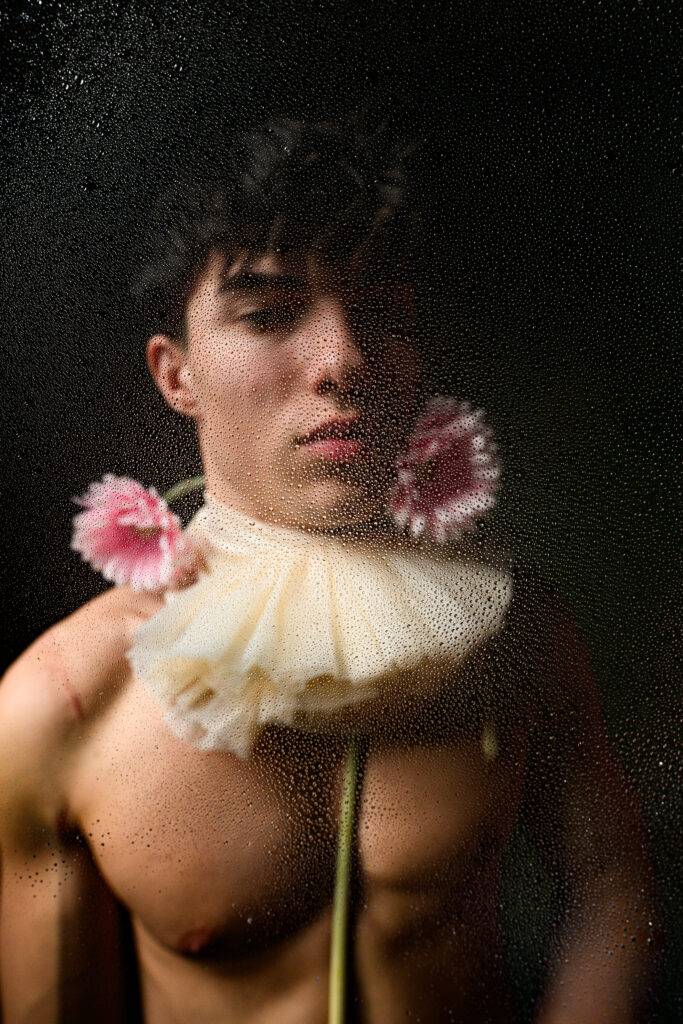
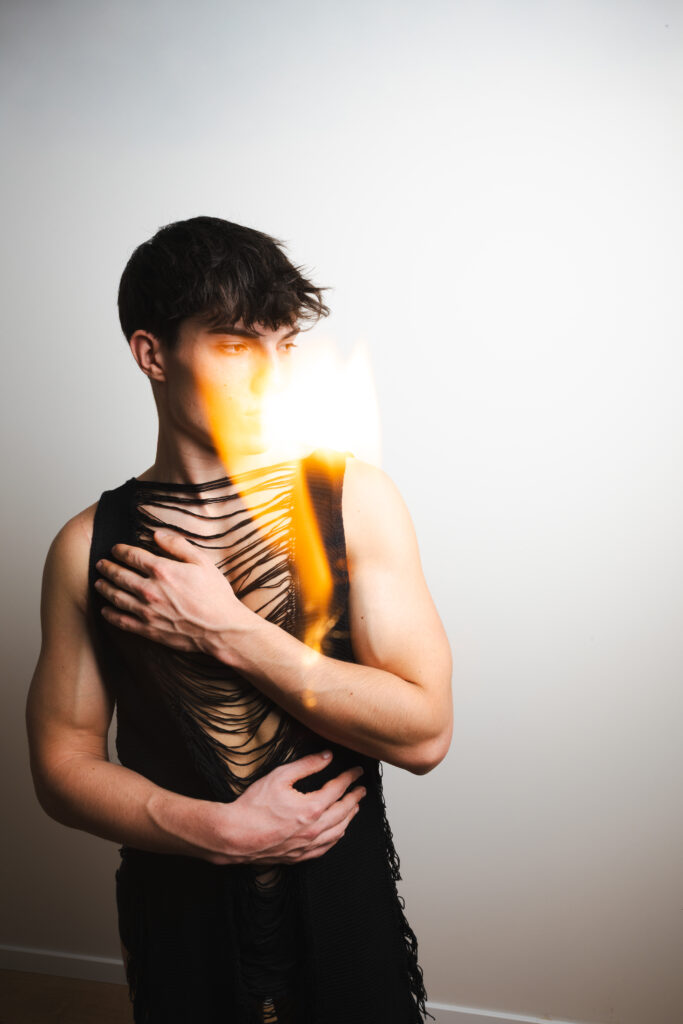
In these shots below, the lens shows a really nice balance between sharp subject rendering and softer background areas, which makes it great for creative work. At closer focusing distances, you can get a noticeable amount of Bokeh. The 11-blade aperture helps keep highlights fairly round. It’s a really appealing look – sharp subject, gently blurred context, allowing for unique environmental portraits that don’t look like they were taken with a typical wide-angle.
Contrast & Colors
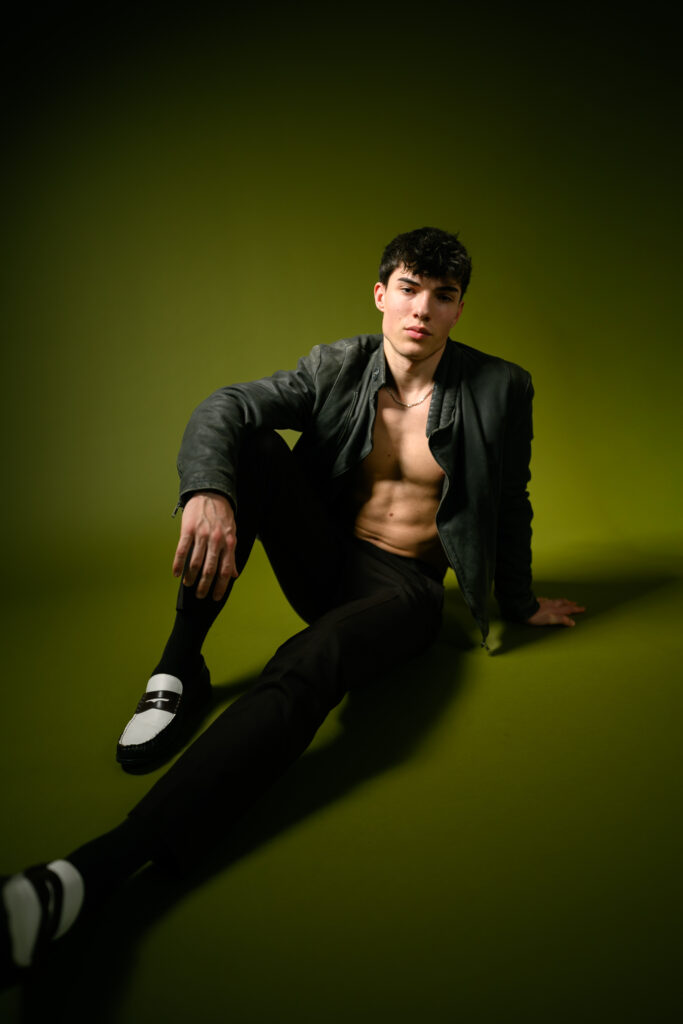
The lens delivers solid contrast straight out of camera. Images feel punchy without being overly harsh, and there’s a nice sense of depth thanks to good tonal separation. Great sharpness together with that microcontrast and beautiful fall-off produce a nice 3D pop effect that can be used for environmental portraits. Color rendering leans fairly neutral, maybe slightest hint towards warm. Skin tones look natural, which is especially important for fashion or beauty related work.
Chromatic Aberration
This is one area where the lens performs better than expected. Longitudinal chromatic aberration (LoCA), which often shows up as green/purple fringing, is very well controlled for an f/1.4 lens. This makes a real difference when shooting wide open in high-contrast situations like backlit scenes.
Distortion & Vignetting
Distortion is quite minimal and rarely noticeable. Vignetting is visible at f/1.4 but better controled than on comparable lenses. By f/2 it improves, and by f/2.8 it’s much less pronounced. For certain types of photography I like having some vignetting as it can actually add a bit of atmosphere. If you would like to correct for distortion and vignetting, the Lightroom profile available does a good job in that.
Low Light Performance
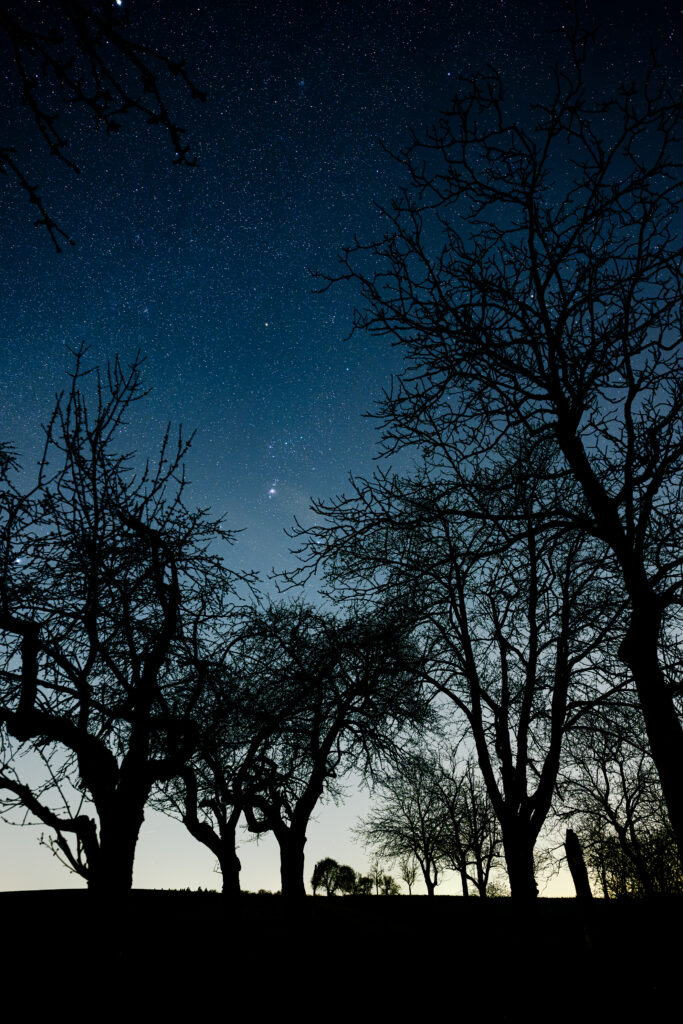
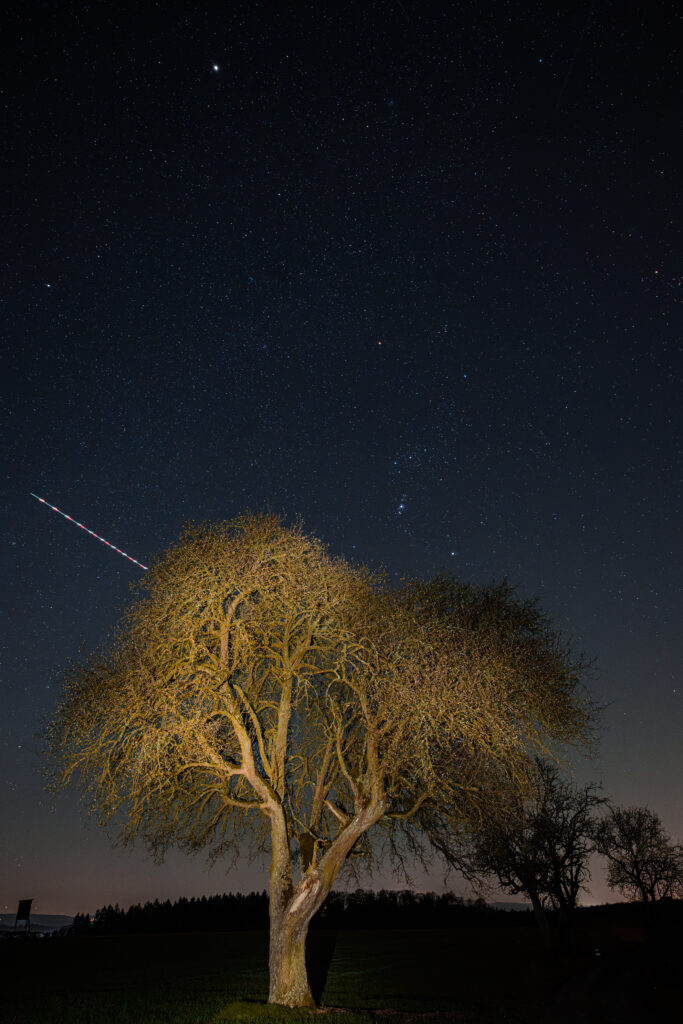
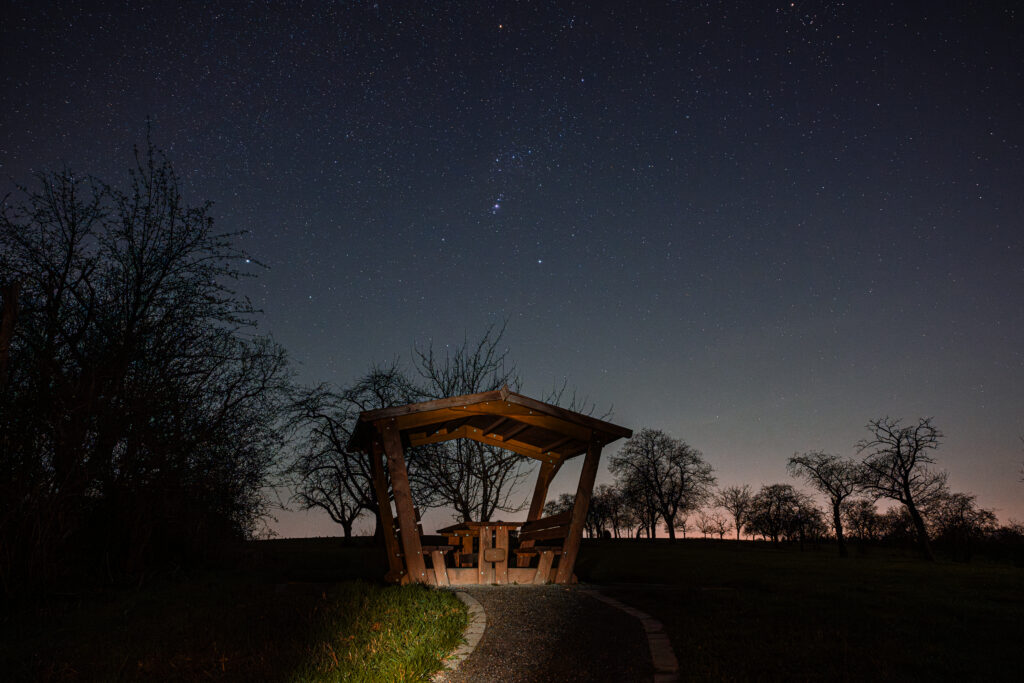
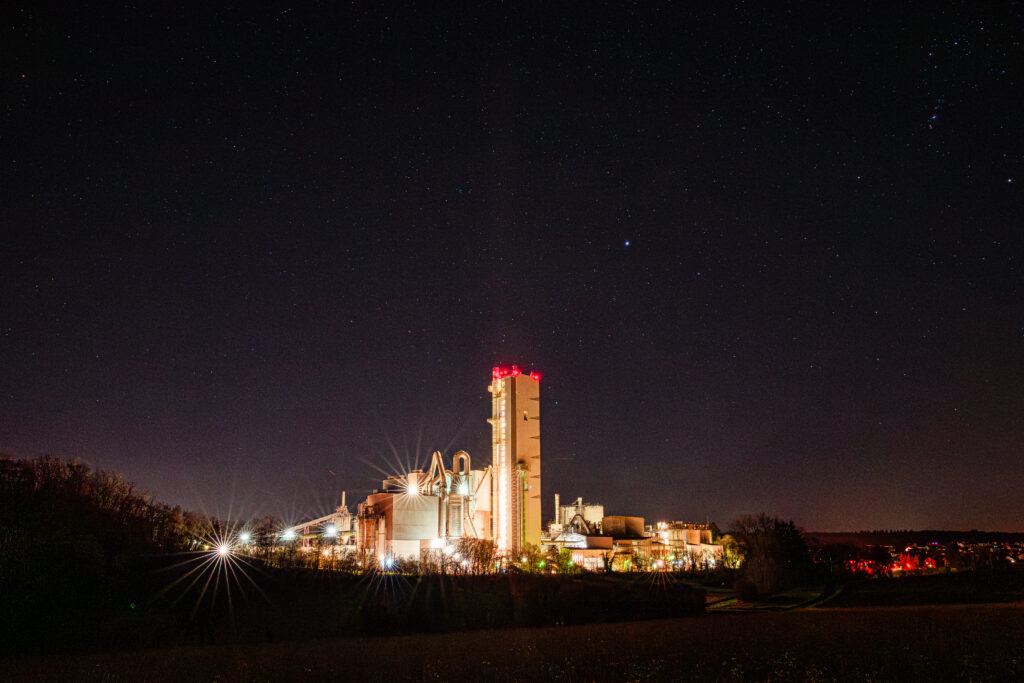
The lens’s biggest strength is its very bright f/1.4 aperture, which allows a significant amount of light to reach the sensor. This makes it particularly well suited for night photography, indoor shooting without the need for flash, and even astrophotography such as capturing the Milky Way. In fact, low-light capability is clearly what this lens is designed for. In real-world use, the wide aperture allows you to keep ISO levels lower while maintaining faster shutter speeds, resulting in cleaner images with less noise and better overall detail.This is where the lens really shines – but what makes it special is how well it handles point light sources. Coma is well controlled, meaning stars don’t turn into smeared “wings” toward the edges of the frame. That’s a huge plus if you’re into astrophotography.
Autofocus & Video
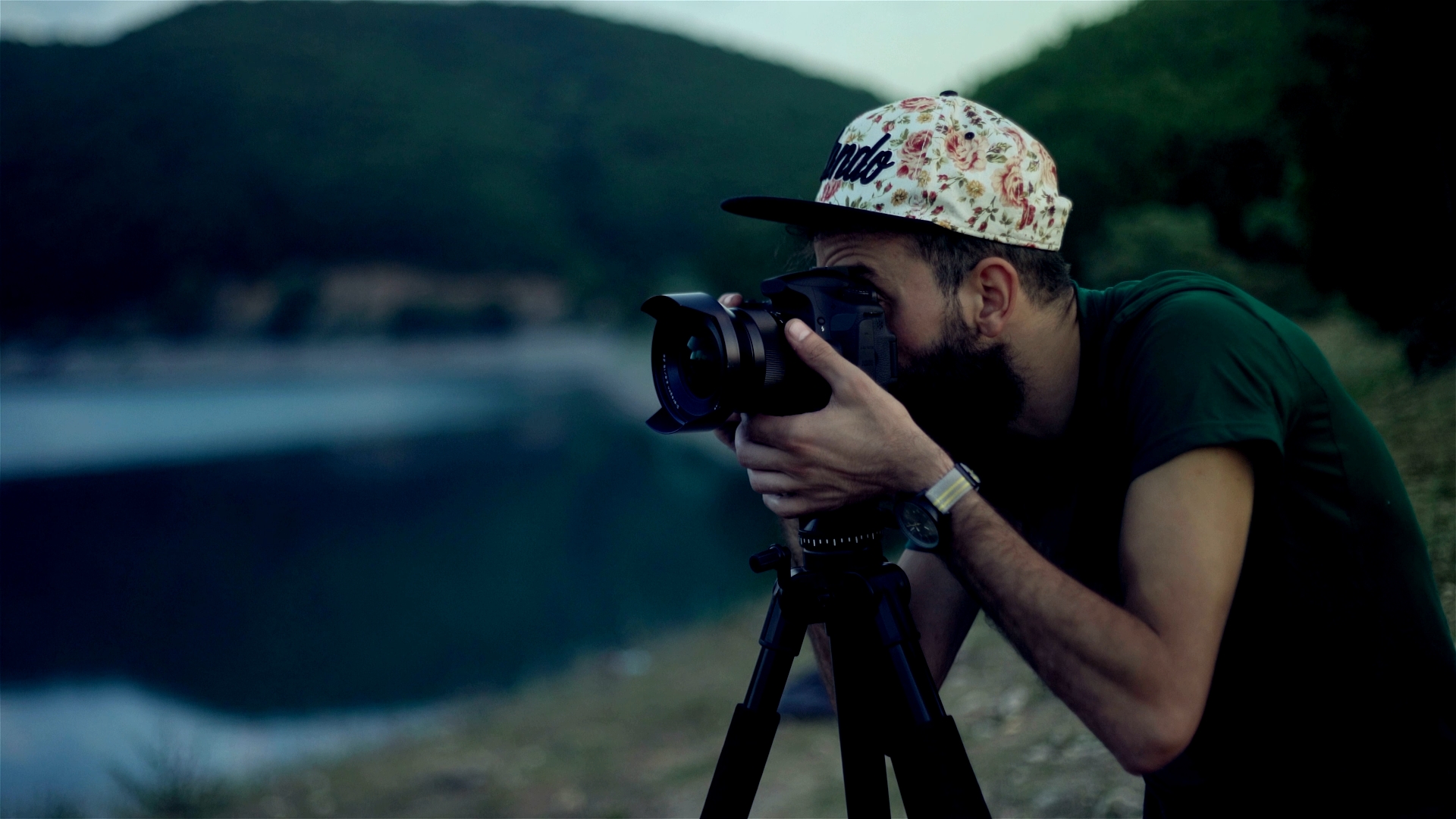
The focus ring is smooth, and while manual focus is a bit jumpy, the STM autofocus motor is fast and quiet in most situations. Eye AF works well for stills. Speed-wise, it’s more than enough for normal scenarios, though it might lag slightly behind first party lenses during fast action tracking as it’s not a sports lens but more suited for almost pretty much all other genres (landscape, street, wedding, people etc.). The Meike 24mm f/1.4 can be used well for photo and video work. In the latter use case though it can show a moderate amount of focus breathing which might be relevant for videographers looking for smooth cinematic focus pulling.
Conclusion
Pros:
- Excellent sharpness in the center wide open
- Solid build quality with extended weather sealing
- Very good control of chromatic aberration
- Attractive, soft bokeh
- Great value for money
Cons:
- None at this point
After being impressed by the 85mm f/1.8 fromMeike’s PRO series, I was excited to get my hands on the Meike 24mm f/1.4 MIX, which promises to bring high-speed, wide-angle performance to Z-mount cameras at a fraction of the cost of other alternatives. Having used this lens extensively, I can say that for around 600 EUR, it is a surprisingly premium-feeling lens that punches far above its weight class in terms of image quality, features and build. The Meike 24mm f/1.4 MIX isn’t just competeting with the best 24mm AF lenses on the market – it delivers a really well-balanced package without any significant flaws. My personal highlights are the strong center sharpness and excellent low-light capability that holds up well for Astro Photography while maintaining beautiful bokeh for portrait work. This is an easy recommendation for anyone needing a bright, sharp 24mm prime.
Recommended for: Landscape, Street, Architecture, Environmental Portraiture, Fashion and Astrophotography